
Shoulder Arthroscopy

  • Home
  • Shoulder Arthroscopy

Mastering Shoulder Arthroscopy – Basic to Intermediate Simulation Program


Course Image
team image

Dr. Kannan Karuppiah K

Dr. Kannan Karuppiah Kumar is an experienced Orthopaedic Surgeon with expertise in diagnosing and treating a wide range of musculoskeletal conditions. He specializes in managing joint disorders, fractures, sports injuries, and degenerative bone conditions. With extensive clinical experience, Dr. Kumar is dedicated to providing comprehensive orthopaedic care using advanced treatment approaches to improve patient mobility and quality of life.

Read More
team image

Dr Rudra Prasad

Dr. Rudra Prasad is a senior Orthopaedic Surgeon with extensive experience in the diagnosis and management of musculoskeletal disorders. He has developed strong expertise in arthroscopy, sports injury management, joint disorders, and trauma care. With decades of clinical experience, he has successfully managed a wide range of orthopaedic conditions involving the knee, shoulder, and other joints.

Read More
Course Overview

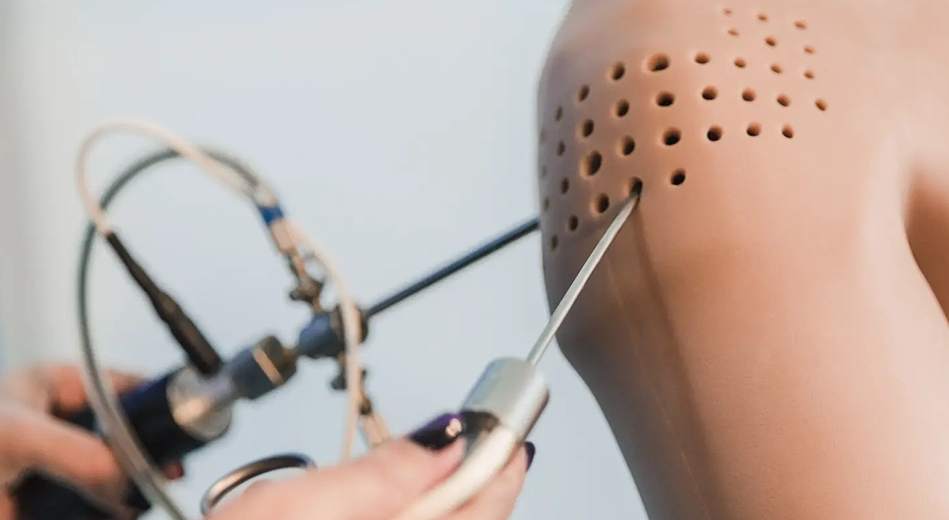
The Shoulder Arthroscopy Simulation Training Program is designed to address the most challenging part of arthroscopy knowing where you are and what to do next. Instead of learning these skills under operating room pressure, participants train in a high-fidelity simulation environment where repetition, mistakes, and correction are encouraged.

This course sharpens the surgeon’s arthroscopic vision and decision-making, focusing on orientation, horizon control, safe portal use, and smooth procedural flow. Through stepwise, mentor-guided simulation, trainees convert fragmented movements into a clear, logical surgical sequence.

The program enables learners to enter live surgery prepared, confident, and situationally aware, reducing the learning curve and enhancing patient safety from the very first case.

Learning Objectives
  • Demonstrate safe arthroscopy setup and ergonomic positioning
  • Achieve systematic glenohumeral and subacromial orientation
  • Maintain controlled camera navigation with horizon stability
  • Identify key glenohumeral and subacromial landmarks
  • Perform basic arthroscopic tasks (probing, shaving, knot handling)
  • Execute core shoulder arthroscopy procedures on simulator
  • Recognize common errors and avoid iatrogenic cartilage or capsular injury
  • Demonstrate simulation readiness for assisted live surgery
Learning Methodology
  • VR arthroscopy simulator–based training (preferred modality)
  • Faculty-supervised, hands-on skill acquisition
  • Stepwise task progression (foundation → diagnostic → procedural)
  • Verbal anatomy narration (“talk-through arthroscopy”)
  • Error-based learning and reflective feedback
Learning Outcomes
  • Perform a complete diagnostic shoulder arthroscopy independently
  • Maintain stable visualization for >90% of task duration
  • Execute basic arthroscopic procedures without cartilage violation
  • Verbally interpret pathology and outline next surgical steps
  • Demonstrate readiness for assisted live OR participation
Eligibility Criteria
  • Orthopaedic residents
  • Arthroscopy fellows
  • Young orthopaedic surgeons transitioning to shoulder arthroscopy
Course Modules
Module 1: Core Shoulder Arthroscopy Skills
  • Camera navigation with horizon control
  • Glenohumeral and subacromial orientation
  • Hand–eye coordination and triangulation
  • AANA and 15-point diagnostic framework
  • Systematic probing and joint assessment
Module 2: Shoulder Arthroscopy Diagnostic Techniques
  • Structured diagnostic arthroscopy of the glenohumeral joint
  • Subacromial space diagnostic evaluation
  • Identification of key anatomical landmarks
  • Recognition of common shoulder pathologies
  • Diagnostic sequencing and interpretation
Module 3: Instrument Handling & Procedural Control
  • Safe portal usage and instrument navigation
  • Coordinated camera–instrument movement
  • Controlled tissue handling techniques
  • Maintenance of clear visualization during tasks
  • Error avoidance and safety principles
Module 4: Therapeutic Shoulder Arthroscopy Procedures
  • Subacromial decompression techniques
  • Subacromial debridement procedures
  • Arthroscopic loose body identification and removal
  • Procedural flow and task completion on simulator
  • Safe execution of therapeutic interventions

WhatsApp