
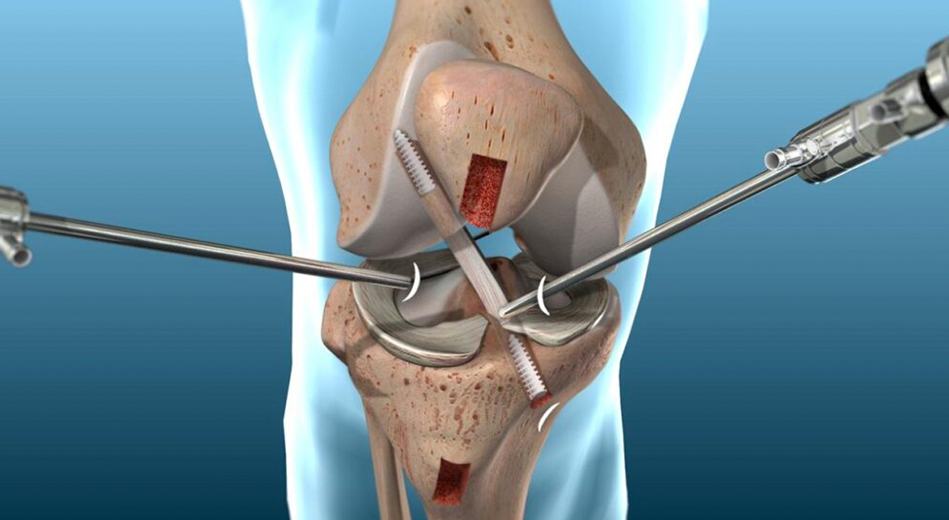
ACL Reconstruction Arthroscopy

  • Home
  • ACL Reconstruction Arthroscopy

ACL Reconstruction Arthroscopy Simulation Course


Course Image
Course Overview

The ACL Reconstruction Arthroscopy Simulation Course is an advanced, procedure-specific training program designed to develop technical precision and anatomical understanding required for safe and effective arthroscopic anterior cruciate ligament reconstruction. Using the high-fidelity ACL Reconstruction module, participants engage in immersive simulation that integrates realistic knee anatomy, instrument handling, and biomechanical feedback.

The course enables learners to perform all critical steps of anatomical ACL reconstruction, with particular emphasis on femoral and tibial tunnel placement, graft positioning, and understanding the consequences of malalignment. Through guided and unguided therapeutic cases representing complete and partial ACL ruptures, trainees refine decision-making and procedural flow in both chronic and subacute scenarios. Objective performance metrics and haptic feedback support deliberate practice, allowing participants to achieve measurable improvements in accuracy, efficiency, and reconstructive confidence prior to clinical application.

Learning Objectives
  • Understand ACL biomechanics and principles of anatomical reconstruction
  • Identify key arthroscopic landmarks for femoral and tibial tunnel placement
  • Practice safe handling of ACL reconstruction instruments on simulator
  • Appreciate the impact of tunnel positioning on knee stability
  • Develop a structured, stepwise approach to arthroscopic ACL reconstruction
Learning Methodology
  • High-fidelity mixed-reality ACL reconstruction simulation with 3D anatomical navigation
  • Stepwise guided and unguided procedural reconstruction scenarios
  • Deliberate practice with haptic feedback for bone, tendon, and graft handling
  • Instrument-specific skill training with objective performance metrics
  • Faculty-led debriefing with pre- and post-simulation proficiency assessment
Learning Outcomes
  • Perform simulated anatomical ACL reconstruction with accurate tunnel placement
  • Demonstrate consistent graft positioning aligned with anatomical landmarks
  • Complete guided and unguided ACL reconstruction cases with reduced technical errors
  • Show improved procedural efficiency and instrument coordination
  • Evaluate individual performance using simulator-generated objective metrics
Eligibility Criteria
  • Orthopaedic residents (PGY-3+), fellows, and practicing orthopaedic surgeons
  • Prior basic knee arthroscopy experience recommended
  • Valid medical registration or license
  • Mandatory completion of the pre-course ACL anatomy and principles module
Course Modules
Module 1: ACL Biomechanics & Injury Mechanisms
  • ACL function and knee kinematics
  • Common injury patterns and mechanisms
  • Indications for reconstruction
  • Principles of anatomical restoration
Module 2: Arthroscopic Anatomy & Landmark Identification
  • Intra-articular knee anatomy review
  • Femoral and tibial footprint identification
  • Safe zone recognition
  • Arthroscopic orientation techniques
Module 3: Simulator Orientation & Instrument Handling
  • Camera navigation and horizon control
  • Handling of ACL-specific instruments
  • Portal use and triangulation
  • Safe instrument–tissue interaction
Module 4: Guided ACL Reconstruction
  • Step-by-step procedural workflow
  • Femoral and tibial tunnel preparation (guided)
  • Graft passage simulation
  • Error recognition and correction
Module 5: Tunnel Placement & Graft Positioning Concepts
  • Anatomical tunnel positioning principles
  • Graft orientation and tensioning concepts
  • Impact of malposition on knee stability
  • Visualization of reconstructed ACL
Module 6: Unguided Therapeutic ACL Reconstruction
  • Independent execution of full procedure
  • Procedural sequencing and decision-making
  • Efficiency and flow optimization
  • Complication avoidance strategies
Module 7: Performance Analysis & Proficiency Benchmarking
  • Objective assessment of accuracy and efficiency
  • Tunnel placement and graft positioning metrics
  • Faculty feedback and performance review
  • Simulation readiness for live surgery
WhatsApp
